A recommendation for your home
Discuss your planned equipment and whether the existing service can support it. An upgrade is recommended only when the assessment supports it.

200-AMP SERVICE UPGRADES · SUFFOLK COUNTY
Start with your plans. We’ll help you understand
the electrical work behind them.
A CLOSER LOOK AT OUR WORK
Look closer at the workmanship.
See the details behind the cover.
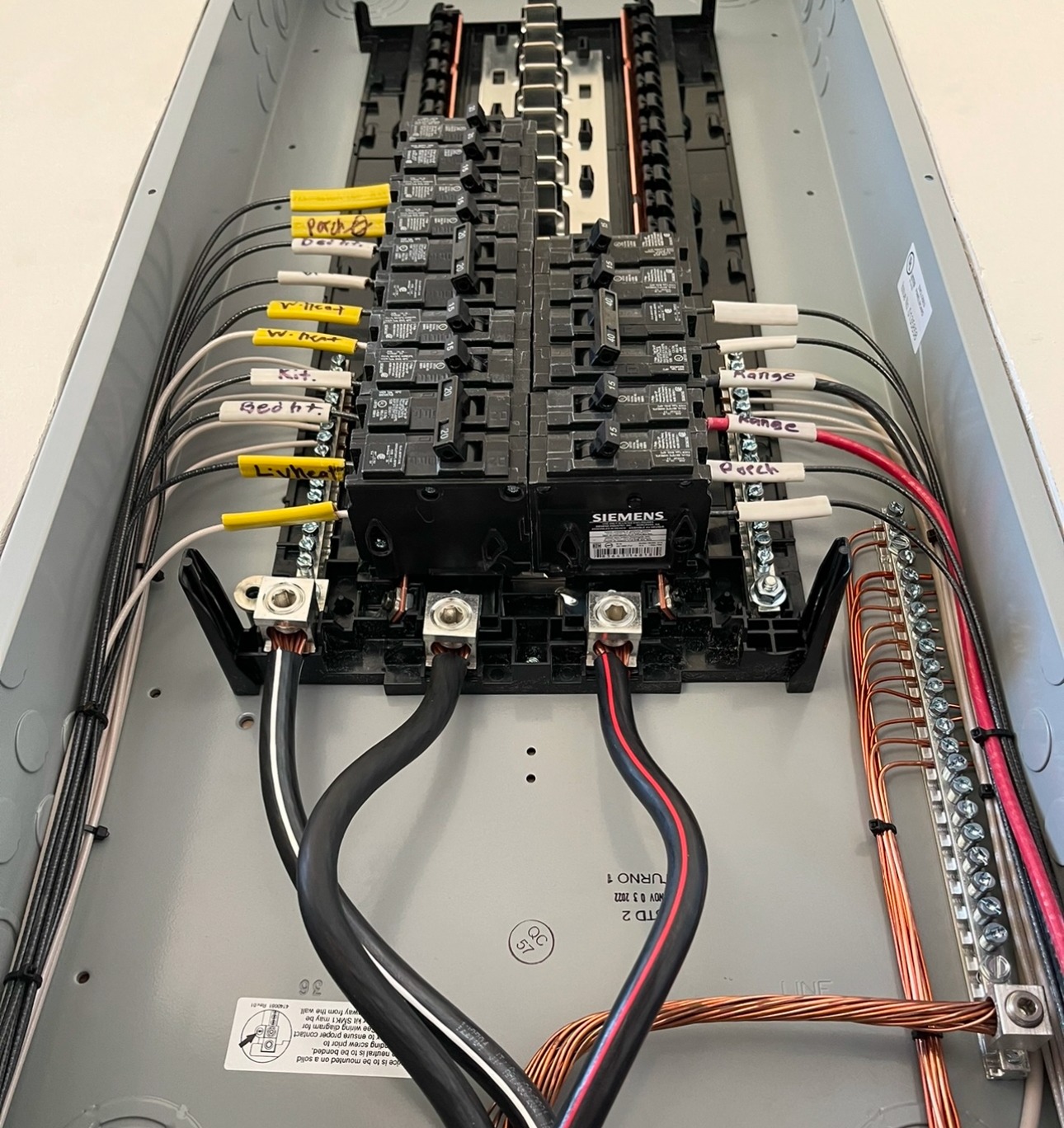
A CLOSER LOOK AT THE PANEL
A closer look at the details inside: labeled conductors, circuit connections and the layout behind the cover.
Photographed with the cover removed to document the work. Equipment and scope vary by home.
Your home gets its own assessment and written scope.INSIDE THE WORK
Project photos of panel interiors and conductor routing. Tap any photo to enlarge.
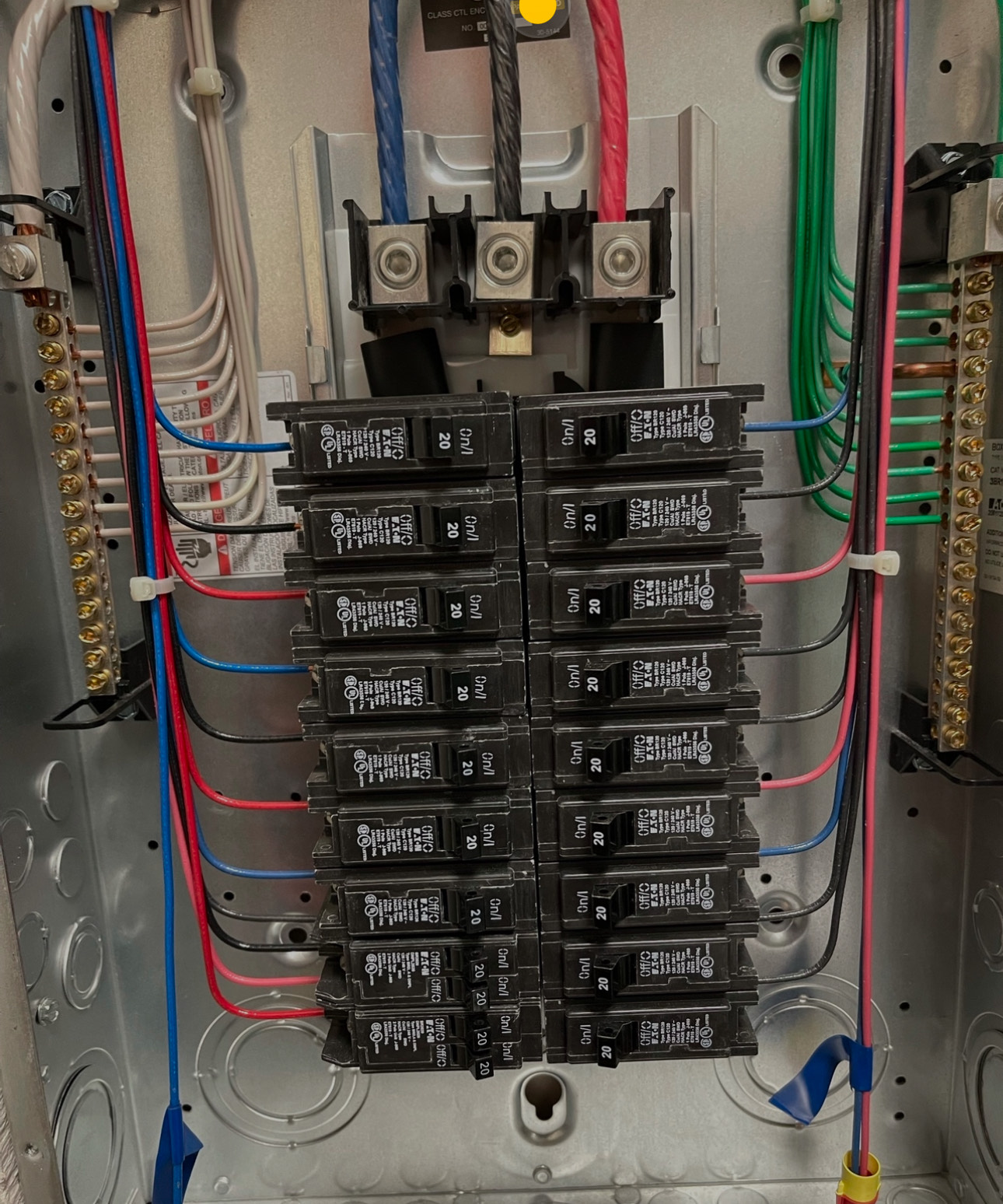 Panel wiring ↗
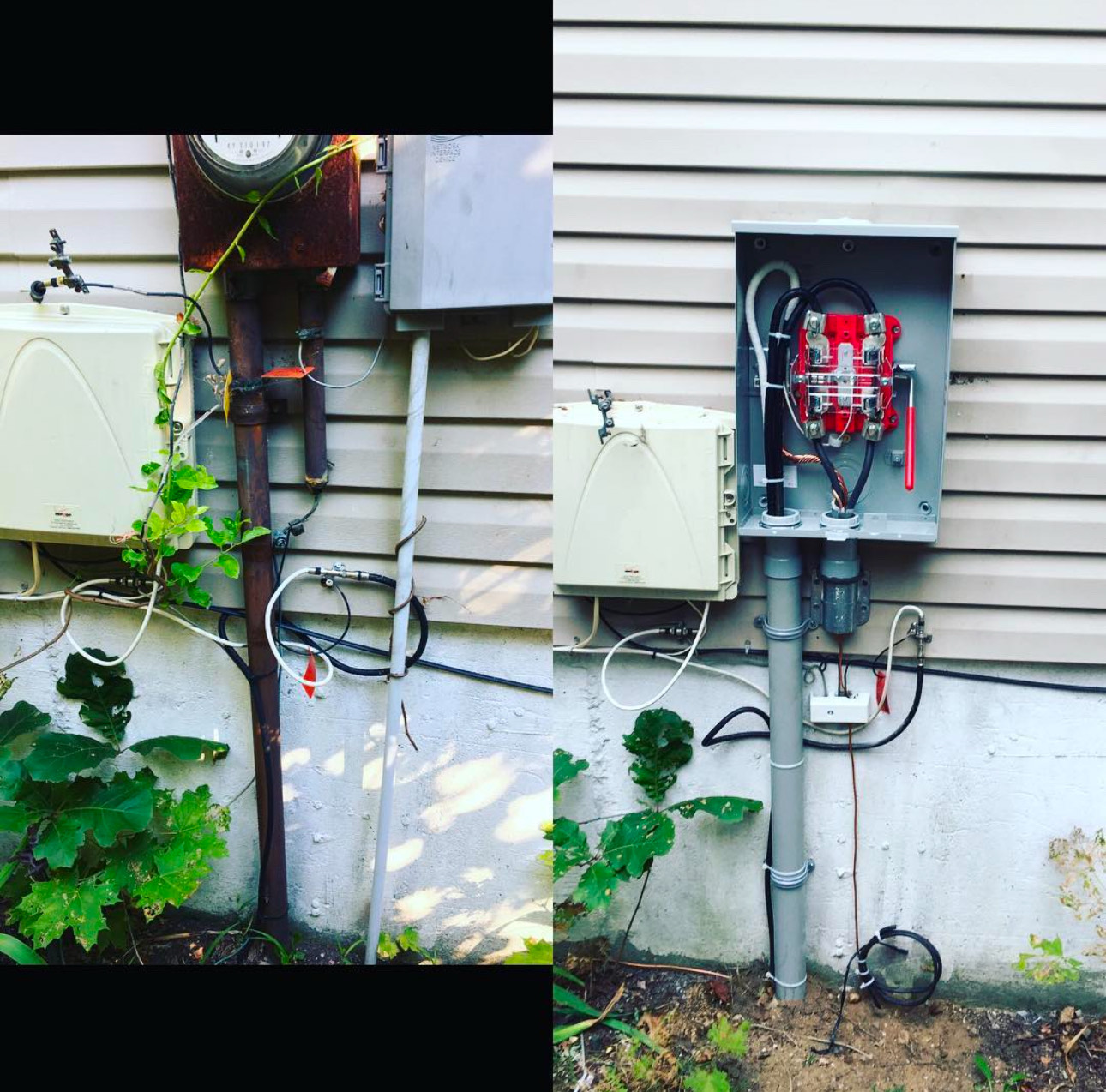 Meter replacement · in progress ↗
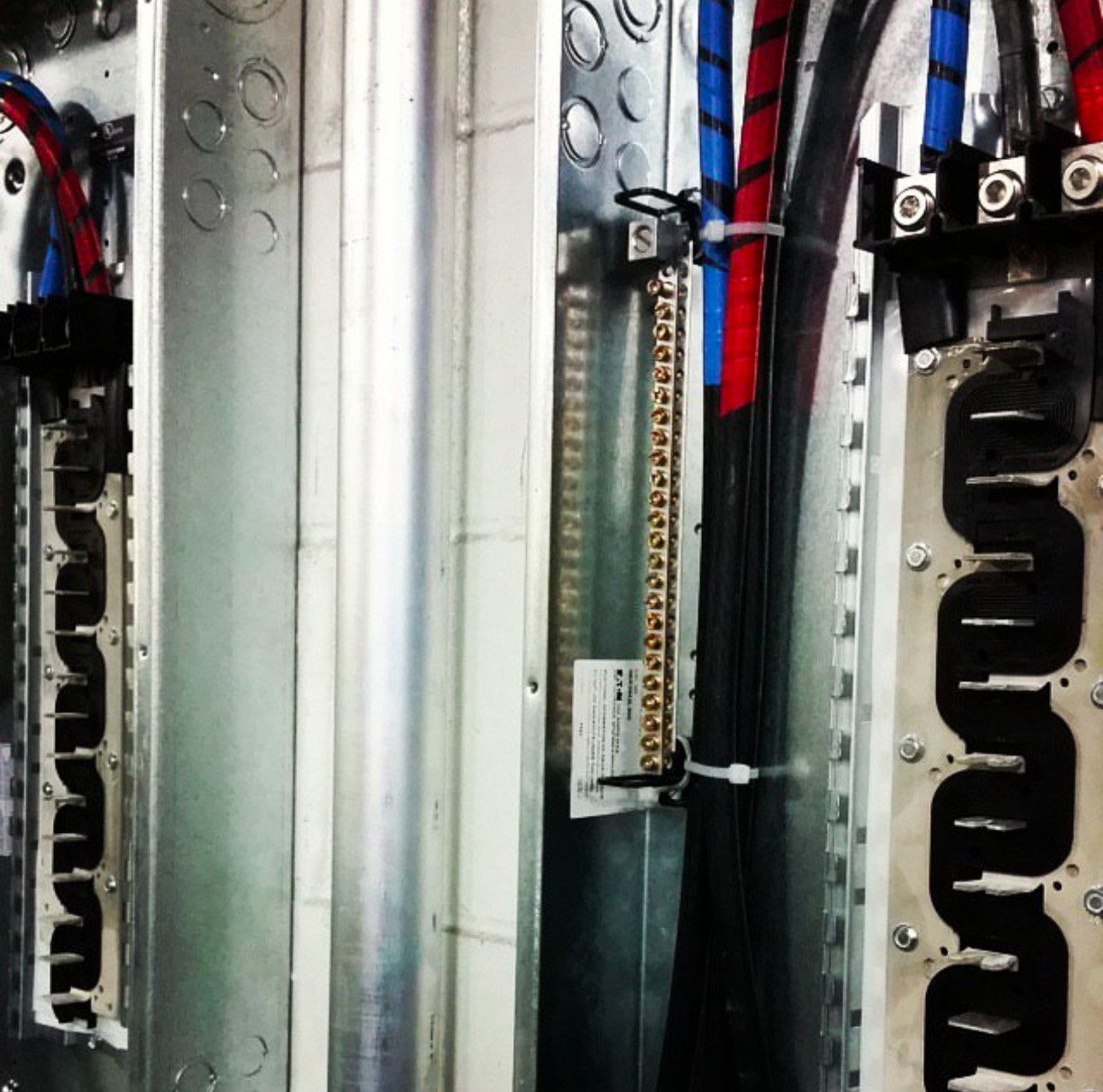 Conductor routing ↗
Open equipment is shown for documentation. Homeowners should keep electrical covers in place.
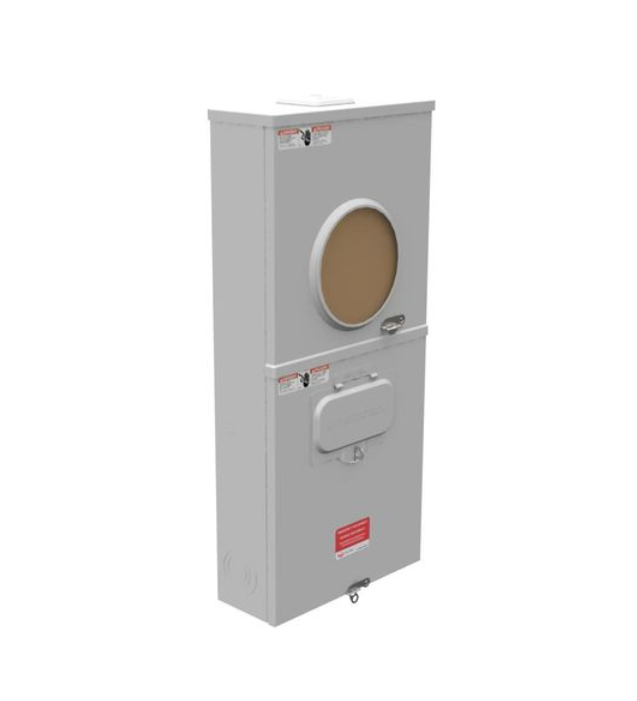
UNDERSTAND YOUR EQUIPMENT
This meter-main enclosure is an equipment example, not a completed project photo. The equipment for your home is selected as part of your project-specific scope.
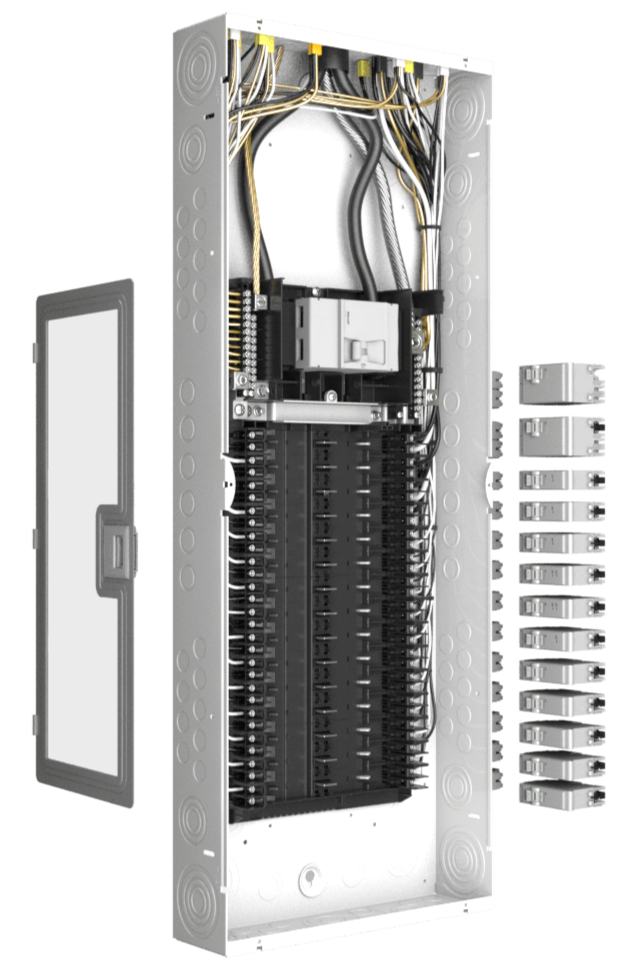
EXPLORE YOUR PANEL OPTIONS
Take a closer look at the panel before discussing the right equipment for your home. Features and accessories depend on the selected model and your written proposal.
View the supplied Leviton overview ↗START WHERE YOU ARE
Understand your options before you commit.
Explore at your pace. No contact details needed.
YOUR UPGRADE ASSESSMENT
Start with your plans. Review the existing service. Understand the recommended work before deciding what comes next.
Discuss your planned equipment and whether the existing service can support it. An upgrade is recommended only when the assessment supports it.
Know which equipment and work are included, what is excluded, and the project-specific price.
Understand the approvals, deposit, coordination and scheduling steps before work begins.
THE HOME YOU LOVE. THE LIFE YOU’RE PLANNING.
Start with what you want your home to do.
We’ll help you plan the electrical part.
CENTRAL AIR & HEAT PUMPS
Plan your heating and cooling with the electrical work in view. Start with the equipment you’re considering and the service you have today.
Build a preparation list for your project. No contact details needed.
Your plans come first. Adding new equipment doesn’t automatically mean you need a service upgrade. The assessment determines the right scope.
THE ELECTRICAL PART, EXPLAINED
A useful estimate starts with your home—not a one-size-fits-all package.
See what affects the scope ↗Your existing service, the equipment you’re adding, and a professional assessment of the electrical load.
A defined scope explaining the recommended work, inclusions, exclusions and project-specific price.
Discuss installation, utility requirements, inspections and the expected interruption to power.
AN EASY PLACE TO START
Share what you’re planning and prepare a few photos of your existing service.
Preliminary review only. Keep covers in place. An on-site assessment may be needed.200-AMP SERVICE UPGRADES
A starting point for your plans.
Your final price depends on the existing service, equipment, location, access and work required. An assessment and written proposal confirm your project’s total price, inclusions and exclusions.
This is a starting price, not a fixed quote for every home. Deposit and payment terms are set out in your approved agreement.THE SCOPE BEHIND THE PRICE
Your service upgrade starts with what’s there today—and what you want your home to do next.
These four details shape the work. Your written proposal should make each one clear.
EV charging, heating, cooling and renovation plans all belong in the same conversation. An assessment helps determine whether the existing service can support them.
ASK: What makes an upgrade necessary for my home?The service connection, equipment location and access can change the work involved. Relocation, excavation and longer routes need a defined scope.
ASK: Are routing, excavation and restoration included?Your proposal should identify the service equipment, panel and breakers, grounding and bonding work, and any circuit changes included in the project.
ASK: Exactly which equipment and circuit work am I getting?Confirm who handles utility coordination, permits where required and inspections. Discuss the power interruption and responsibilities for patching, painting and other finish work.
ASK: Who handles each step—and what is excluded?MAKE IT SPECIFIC TO YOUR HOME
Explore your project’s scope and leave with a focused list of questions.
THE STANDARD BEHIND YOUR UPGRADE
Code-compliant installation.
Whole-home surge protection.
We perform service-upgrade work to the applicable adopted National Electrical Code requirements, local requirements, utility specifications and manufacturer instructions.
Your project’s scope accounts for the required equipment, grounding and bonding, and applicable inspection steps.
New York State’s 2025 Uniform Code became effective December 31, 2025. The requirements that apply to a particular project depend on the permit and local enforcement authority.
Read the NYS adoption notice ↗We use whole-home surge protection as part of our service-upgrade work. A properly selected and installed surge protective device helps limit transient overvoltages reaching connected equipment.
Your written scope identifies the compatible device, its ratings and installation location. Protection requirements are reviewed alongside the rest of your service upgrade.
THE HOMEOWNER EDUCATION CENTER
WHY THE MAIN BREAKER LOCATION MATTERS
A panel that looks small may be part of a much larger service arrangement. Before replacing it, we identify where the service disconnect is, what the existing service can support, and which current requirements the work triggers.
BEFORE YOU COMMIT
Your questions belong in the conversation.
Our 200-amp service upgrades start at $5,800. Your final price depends on your home’s existing service, selected equipment, location, access and required work. Your assessment and written proposal establish the total price, what is included and excluded, and the deposit and payment terms. The starting price is not a fixed quote for every home.
Sometimes, but it depends on the service arrangement and the work involved. Replacing service equipment can trigger outdoor emergency-disconnect and surge-protection requirements, even when the amperage stays the same. A downstream panel with an existing upstream disconnect needs a different assessment. More breaker spaces do not, by themselves, increase service capacity. The new work must meet applicable requirements; that does not automatically mean every untouched circuit must be replaced.
We perform service-upgrade work to the applicable adopted NEC, local requirements, utility specifications and manufacturer instructions. New York’s 2025 Uniform Code became effective December 31, 2025. Applicable requirements are confirmed for your project and permit.
Yes. We use whole-home surge protection as part of our service-upgrade work. Your proposal identifies the compatible device and installation details. We select the protection to meet the applicable requirements for your installation. Ask about the device’s ratings and any additional protection appropriate for your equipment.
Not necessarily. A professional assessment considers the new equipment, existing loads and available capacity. The right solution depends on your home and the equipment you choose.
A project-specific proposal should define the work, equipment, price, payment terms, inclusions and exclusions. Ask who handles the utility, permits and inspections, and whether any finish repairs are included.
Service replacement typically involves a planned interruption. The expected duration and coordination depend on your project and utility requirements. Discuss arrangements before work is scheduled.
Photos can help start the conversation, but they may not show everything needed to define the work. An on-site assessment may be required before a final proposal.
Installation inquiries are for Suffolk County. The guides are available to all Long Island homeowners. If you’re elsewhere, we’ll make the service-area limit clear before you proceed.
Use the planner to prepare your project details, then open the inquiry in your email app and press Send. The team can review your email, ask follow-up questions and discuss an assessment. You can also call 631-804-1129. Once your written proposal is approved, the agreed deposit comes before scheduling and coordination.
FROM FIRST QUESTION TO FINISHED WORK
One agreed step at a time.
Review your plans and the existing service. Confirm the right scope for your home.
Review the proposal, inclusions, exclusions and payment terms. Approve the agreed work.
Pay the deposit stated in your approved agreement. Receive confirmation of payment and the next steps.
Coordinate equipment, utility requirements and inspections. Confirm the installation plan and power interruption.
Complete the agreed work, applicable inspection steps and walkthrough. Settle remaining payments under the agreement.
The deposit amount and payment schedule are defined in your written agreement. Installation dates depend on project readiness and required coordination.

YOUR HOME. YOUR NEXT CHAPTER.
Serving Suffolk County homeowners.